
Dakshinkali is an open-air shrine to the goddess Kali set in a wooded gorge about 20 kilometres south of central Kathmandu, below the village of Pharping on the southern rim of the valley. The shrine stands at the meeting of two small streams, in a hollow rather than on a hilltop, and is one of the most visited Shakta temples in Nepal. It is also the best-known site in the country for the ritual offering of animals, which takes place mainly on Tuesdays and Saturdays and peaks during Dashain.
Who is Dakshinkali and why is the shrine named for the south?
Kali is the fierce form of the Great Goddess in the Shakta tradition, associated with time, destruction and the removal of what obstructs. Dakshin means south, and the name is generally read in two ways at once: the shrine lies at the southern edge of the Kathmandu Valley, and the goddess faces or is approached from the south. The image itself is a dark stone figure of the goddess standing over a prone form, set in a low walled enclosure that is open to the sky, with a canopy above and the stream running immediately beside it.
There is no roof over the sanctum, which is unusual and gives the place its atmosphere. Water, forest and stone do most of the work. The approach descends by steps from the road through trees, so you hear the site before you see it: bells, the stream, the crowd on a ritual morning. Around the main enclosure are smaller shrines, and the wooded slope above the temple is used by families as picnic ground after the ritual is finished.
The foundation is usually attributed to the Malla period, before the eighteenth-century unification of Nepal, with the familiar story of a ruler instructed in a dream to build a shrine for the goddess. Documentation for the earliest phase is limited, and the visible structures have been repaired and extended many times, so the shrine is best understood as a very old cult site whose buildings are comparatively recent. What is not in doubt is its position in the living religion of the valley: Dakshinkali is one of the principal Kali shrines that Kathmandu families visit, and for many households it is the one a vow is made at.
What actually happens at Dakshinkali on a Tuesday or Saturday?
Tuesday and Saturday are the days traditionally associated with the goddess, and they are when the temple works at full intensity. Families arrive early, many of them having travelled from across the valley, and queue down the steps with offering trays: red powder, flowers, incense, fruit, cloth, sometimes a coconut, sometimes an animal. The queue can take well over an hour on a busy morning and considerably longer during Dashain.
Animal offering is the practice Dakshinkali is known for internationally. Uncastrated male goats and cockerels are the usual offerings, brought by devotees who are fulfilling a vow, and the killing is carried out swiftly by attendants at the shrine, with the blood offered to the goddess. The carcass is returned to the family, who take it away, and many families then cook and eat it on the wooded slope above the temple, which is why the site can feel like a picnic ground and a place of sacrifice at the same time. Butchers, tea stalls and shops selling offering materials line the approach.
It is worth being direct about this: visitors who are not expecting it may find the shrine confronting. There is blood on the stone, the animals are visible before the ritual, and none of it is hidden or performed away from public view. It is also worth being accurate about the context. The animals are killed for food as well as for the goddess, in a country where most households eat meat and where slaughter is not normally separated from public life by an industrial supply chain. The practice is not a spectacle staged for outsiders; it is a domestic religious obligation being discharged.
Why do devotees offer animals, and is the practice changing?
The logic is the vow. A devotee asks the goddess for something specific, such as recovery from illness, success in an examination, a safe journey or the birth of a child, and promises an offering if it is granted. Blood offerings belong to a long-standing strand of Shakta and tantric practice in South Asia in which the goddess receives the vital force of the offering, and in Nepal they are concentrated at particular shrines rather than being universal. Vaishnava temples in the same valley receive no animal offerings at all, and at Pashupatinath the ritual economy is entirely different.
Many devotees at Dakshinkali offer no animal. Coconuts, pumpkins, eggs, flowers, cloth and sweets are all accepted substitutes, and their use has grown. There is an active public debate in Nepal about animal sacrifice, driven by animal welfare organisations, some religious reform movements and a broader shift in urban attitudes, and several shrines around the country have moved away from the practice in recent years. Others have not. Both positions are argued in religious terms rather than only in secular ones, and a visitor is under no obligation to arrive at a verdict.
If you would rather not witness a sacrifice, go on a Monday, Wednesday, Thursday, Friday or Sunday, when the temple is quiet and mostly used for ordinary darshan. The setting is at its most attractive on those days anyway.
When should you visit Dakshinkali?
The calendar below is the practical planning tool. Ritual intensity, crowd size and the character of a visit change enormously depending on which day you choose, and the difference between a Tuesday morning and a Thursday morning at the same shrine is dramatic.
| Day or period | When | What to expect | Suitability for visitors |
|---|---|---|---|
| Tuesday | Weekly | Main worship day; long queues from early morning; animal offerings throughout | Most intense; go only if you want to see the full ritual |
| Saturday | Weekly | The busiest day; families from across the valley; picnicking on the slope above | Crowded and vivid; arrive before 7am or expect a long wait |
| Other weekdays | Monday, Wednesday to Friday, Sunday | Quiet; short queue; ordinary darshan and few or no animal offerings | Best for a calm visit and for photography of the setting |
| Dashain | September or October | Peak of the year, especially Maha Ashtami and Nawami; very large crowds | Extremely busy; the ritual at its most concentrated |
| Chaitra Dashain | March or April | The spring festival of the goddess; a smaller but significant surge | Busy but manageable, with good weather |
| Amavasya and Navaratri nights | Monthly and seasonally | Extra worship, night rituals and additional offerings | Atmospheric; check dates locally before travelling |
How do you get to Dakshinkali from Kathmandu?
The temple is about 20 kilometres from Thamel by the road that runs south through Chobar and past Taudaha lake towards Pharping. A taxi takes roughly 45 to 75 minutes depending on traffic through the southern suburbs, and a hired vehicle for a half day is the simplest arrangement because there is little reason to linger once the ritual is over. Public buses run from Ratna Park and Balkhu to Pharping and take considerably longer.
Go early. Traffic out of the city thickens after about eight in the morning, and on ritual days the parking area near the temple fills quickly. The last stretch is a descent on steps from the road to the shrine, so it is not step-free. Dress modestly, remove leather items before entering the precinct, and ask before photographing individuals; photography of the sanctum itself is not appropriate.
What else is worth seeing around Pharping?
Pharping, on the ridge just above the temple, is one of the densest concentrations of sacred sites in the valley and rewards a full morning. It is a major Vajrayana Buddhist centre, with the Asura Cave associated with Padmasambhava, a large modern monastery complex, and a rock face where a self-arisen image of Tara is venerated. A short distance away is Sekh Narayan, a Vishnu shrine set beneath an overhanging cliff above spring-fed pools, which makes an instructive contrast with Dakshinkali: same hillside, entirely different ritual world.
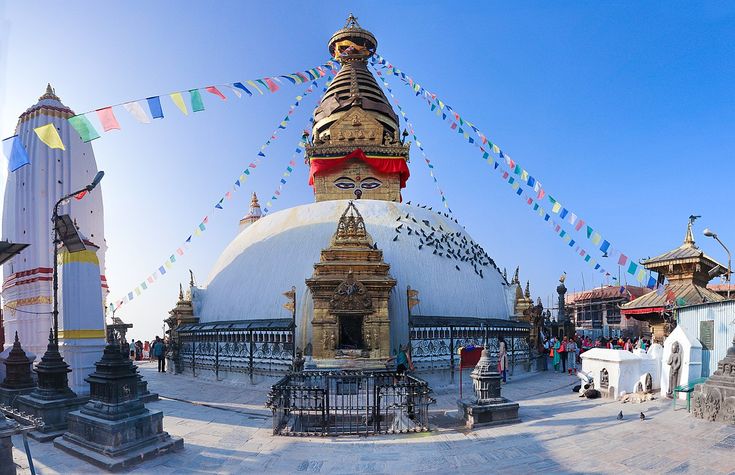
On the way back to the city, Taudaha lake sits beside the road and holds wintering waterfowl from November to February, and the Chobar gorge is where the valley drains through a cleft in the hills. Pair the morning with an afternoon at Swayambhunath or with the temple courtyards of Patan Durbar Square, twenty minutes north, and you have a strong single day of valley religion. Those wanting the full Shakta circuit continue to Guhyeshwari at Pashupatinath and to the Bhagwati shrines around Bhaktapur.
FAQ
What days does animal sacrifice happen at Dakshinkali?
Mainly Tuesdays and Saturdays, the two days traditionally associated with the goddess, and at much greater scale during Dashain in September or October. On other weekdays the temple is quiet and used for ordinary worship, with few or no animal offerings.
Can tourists visit Dakshinkali Temple?
Yes. The precinct is open to visitors of any faith and there are no restrictions on entering the temple area. Dress modestly, remove leather belts and bags before entering, do not photograph the sanctum, and ask before photographing individuals or families making an offering.
Is Dakshinkali upsetting to see?
It can be. The offerings are made in the open, the animals are visible beforehand and blood is part of the ritual. Nothing is concealed or softened. If that is not something you want to witness, visit on a Monday, Wednesday, Thursday, Friday or Sunday, when the shrine is calm.
How far is Dakshinkali from Kathmandu and how long does it take?
About 20 kilometres south of central Kathmandu via Chobar and Taudaha, which is roughly 45 to 75 minutes by taxi depending on traffic. Public buses run from Ratna Park and Balkhu towards Pharping and take longer. Leave before seven in the morning on a ritual day.
What should I combine with a Dakshinkali visit?
Pharping itself, immediately above the temple, with the Asura Cave and Sekh Narayan, plus Taudaha lake and the Chobar gorge on the way back. Adding Swayambhunath or Patan in the afternoon turns it into a full and coherent day of valley religion.