In a field in Dailekh there is a place where flames come out of the ground and never go out. Natural gas seeps through fissures in the rock at Navisthan Kotila and burns continuously, and for as long as anyone can document, the people of this district have treated the phenomenon as a manifestation of Shiva rather than as a geological curiosity. Pilgrims come to it as part of a five-site circuit. Geologists come to it for entirely different reasons. Both are right.
That is a fair summary of Dailekh generally. It is a district where the deep past is not preserved behind glass but is still in use: temples built on foundations older than the buildings, stone inscriptions naming kings who ruled seven hundred years ago, and a pilgrimage route that people still walk. Dailekh sits in the southwestern quarter of Karnali Province, in the middle hills rather than the high mountains, and it is one of the most historically dense districts in western Nepal.
Dullu and the Khas Malla winter capital
The Khas Malla kingdom that dominated the western Himalaya from roughly the twelfth century ran a two-capital system. Sinja, high in the Karnali, served as the summer seat. Dullu, in what is now Dailekh, served as the winter one, because at this lower and warmer elevation the court could function through the cold months when the high valleys were snowed in.
What survives at Dullu is a concentration of inscribed stone: pillars, slabs and temple remains carrying records in the early Khas language that is the direct ancestor of modern Nepali. These inscriptions are the primary source material for the dynasty, and the reason historians can reconstruct a royal genealogy for a kingdom that left no chronicles. For the broader story of that state and its collapse into the Baise principalities, see our article on the Khas Malla kingdom.
Visitors should calibrate expectations. Dullu is not a monumental site in the manner of a Kathmandu Valley durbar square. It is a working settlement with extraordinary stonework scattered through and around it, much of it unmarked and some of it built into later walls. It rewards a slow walk and a local guide, and it frustrates anyone expecting signage.
The Panchakoshi pilgrimage circuit
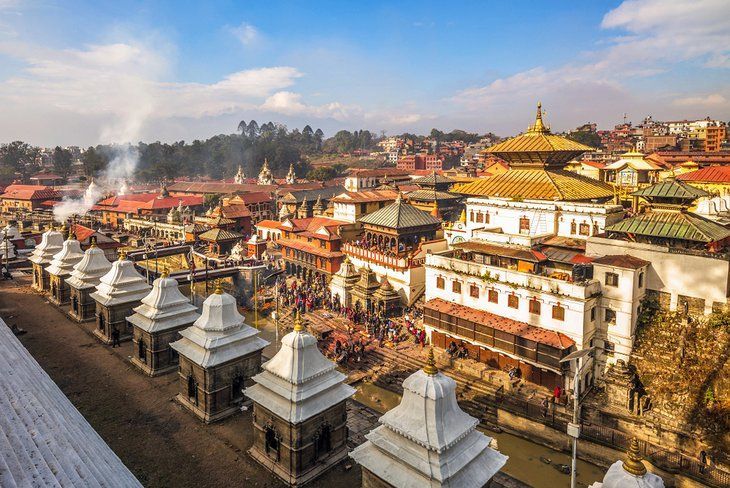
The Panchakoshi is the religious backbone of the district: a set of five Shaiva sites visited in sequence, traditionally on foot, spread across the hills around Dailekh Bazaar. Pilgrims from across the Karnali and the far west come for the main festival days, and the circuit ties together sites that would otherwise read as unrelated village temples.
Names and order vary between local accounts, which is normal for a living tradition rather than a codified one, and any visitor should take a local reading over a printed one. The version most commonly given runs as follows.
| Site | What it is | Position relative to Dailekh Bazaar |
|---|---|---|
| Padukasthan | Shrine associated with sacred footprints; usual starting point of the circuit | Short distance from the bazaar |
| Dhuleshwar | Shiva shrine, one of the principal stops on the route | Hills near the bazaar |
| Navisthan | Site of the continuously burning natural gas vents | A walk out from the bazaar into the surrounding hills |
| Shirasthan | Shrine linked in local tradition to the head of the deity | Ridge country outside the bazaar |
| Kotila | Final site of the circuit, also associated with gas flames | Beyond Navisthan on the walking route |
Walking the full circuit takes a couple of days at a reasonable pace, and it is one of the few things in Karnali Province that is genuinely accessible to a traveller with limited time and no trekking equipment. The trails are village paths rather than mountain routes, the elevations are moderate, and you are never far from a settlement.
The flames at Navisthan Kotila
The burning ground is worth its own paragraph because it is the single most distinctive thing in the district. Gas escaping along fractures in the underlying rock ignites and burns at several points, in some places continuously and in others intermittently depending on pressure and weather. Around the vents are the ordinary furnishings of a Nepali shrine: tridents, bells, offerings, a caretaker.
Do not expect a spectacle on the scale of an industrial flare. The flames are modest, low and easy to walk past if nobody points them out. What makes the place memorable is the way an unusual geological process has been absorbed into religious practice without any apparent friction, and has stayed there for centuries.
Geography: ridges between the Karnali and the Bheri
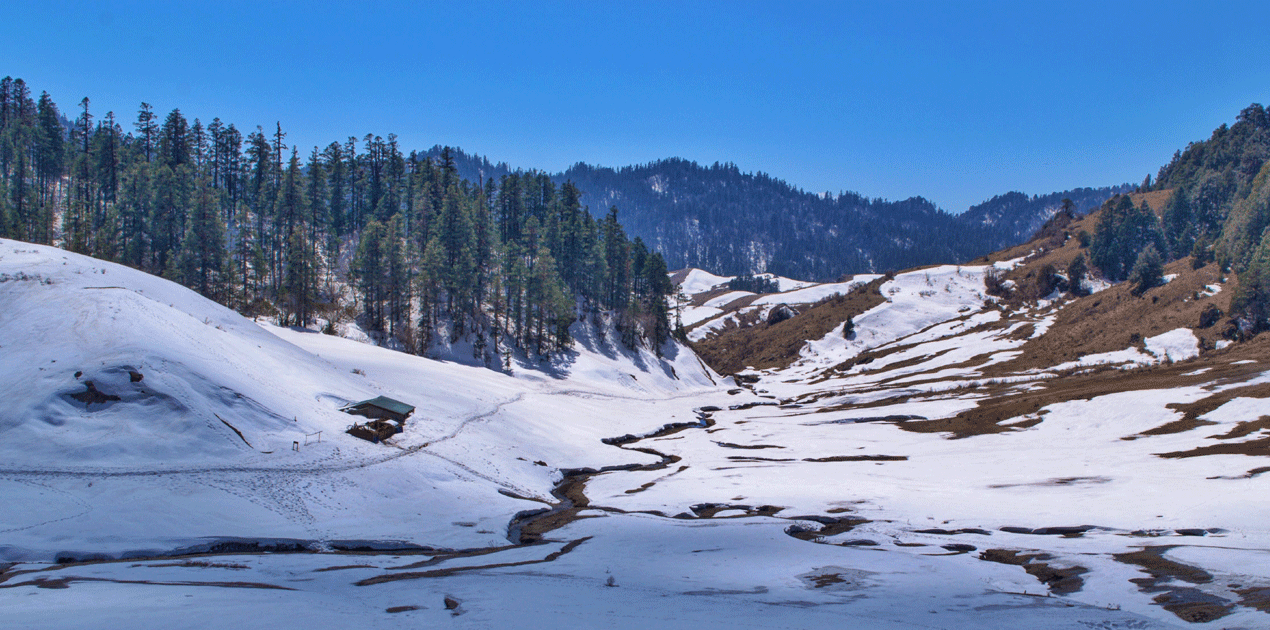
Dailekh is middle-hill country, and its elevation range is far gentler than the districts to the north. River valleys sit low and warm, ridge tops run into pine and oak forest, and the highest ground carries open grazing land. The Karnali river forms the western edge of the district, separating it from Achham in Sudurpashchim Province, while the Bheri catchment lies to the southeast.
That position matters for travel. Dailekh is close enough to Surkhet to be reached in a few hours by road, which makes it the most easily visited historic district in Karnali Province. The high viewpoint country in the Mahabu area gives long views north to the snow peaks on clear days, which is the closest thing the district has to a mountain experience. The destination page for Mahabu in Dailekh covers that side of it.
Culture and festivals in the Khas heartland
Dailekh is Deuda country. The circle dance and its improvised sung verses are performed at fairs, weddings and temple festivals through the district, and in the far west it functions as social memory as much as entertainment. Village fairs tied to the temple calendar are the reliable place to see it done properly rather than for an audience.
The pilgrimage calendar peaks around the main Shaiva festivals, when the Panchakoshi sites fill with walkers from several districts. Travelling then means crowds, no accommodation and a far better sense of what the circuit actually is. Travelling outside those dates means quiet trails and empty shrines. Both are legitimate; decide which trip you want before booking. Our month-by-month guide to festivals across Karnali gives the timings.
Practical information for travellers
Access is by road from Surkhet, which is itself reachable by air from Kathmandu or Nepalgunj and by highway from the Terai. Buses and jeeps run to Dailekh Bazaar daily and the trip is a matter of hours rather than days, which puts the district within reach of a short Karnali itinerary in a way that Dolpa or Humla never will be.
Lodging in Dailekh Bazaar is simple guesthouse standard. Out on the Panchakoshi route, arrangements are informal and a guide or local contact makes a large difference. October to April is the comfortable window; the monsoon makes the roads unreliable and the trails slippery. Bring cash, since ATMs outside the bazaar are unreliable.
FAQ
What is Dailekh district famous for?
Dailekh is known for the Panchakoshi pilgrimage circuit, the burning natural gas vents at Navisthan Kotila, and the stone inscriptions at Dullu, which was the winter capital of the Khas Malla kingdom.
How do you get to Dailekh from Kathmandu?
Travel to Surkhet by air or road, then continue to Dailekh Bazaar by bus or jeep. The final leg takes a few hours, making Dailekh one of the more accessible districts in Karnali Province.
What is the Panchakoshi circuit?
It is a set of five Shaiva sites around Dailekh Bazaar visited in sequence, traditionally on foot. Walking the full route takes roughly two days along village paths at moderate elevation.
Are the burning flames at Dailekh real?
Yes. Natural gas seeping through fractures in the rock ignites and burns at several points near Navisthan and Kotila. The flames are modest in size and are treated locally as a manifestation of Shiva.
When is the best time to visit Dailekh?
October to April. The monsoon makes the roads unreliable and the pilgrimage trails slippery, while the cool dry months are comfortable for walking the circuit.