
Budhanilkantha and Doleshwor Mahadev are two shrines on opposite edges of the Kathmandu Valley that pair neatly into a single day. Budhanilkantha, about 9 kilometres north of central Kathmandu at the foot of the Shivapuri hills, holds a roughly five-metre stone image of Vishnu reclining on the coils of the serpent Shesha in a recessed water tank, carved from a single block of dark stone and generally dated to the Licchavi period around the seventh century. Doleshwor Mahadev, at Sipadol in Bhaktapur some 20 kilometres to the southeast, is a small Shiva temple that was recognised in August 2009 as the head of Kedarnath in the Indian Himalaya.
What is the reclining Vishnu at Budhanilkantha?
The image is the reason to come. Vishnu lies on his side on a bed formed by the coiled body of Shesha, the cosmic serpent, whose eleven hoods rise behind his head. He holds the four attributes of the god: the discus, the conch, the club and the lotus. The whole figure is cut from one piece of dark basalt and rests in a sunken tank filled with water, so the god appears to float on the cosmic ocean, which is exactly the theological point. The form is known as Jalasayan Narayan, Vishnu asleep on the waters between one cycle of creation and the next.
Its scale surprises people who arrive expecting a small shrine. At around five metres the image is one of the largest single-stone sculptures in Nepal, and it is set below the level of the surrounding terrace, so you look down onto it rather than up at it. There is no towering temple building; the setting is a walled compound with a viewing terrace, secondary shrines and a great deal of shade. The stone is not local to the site, and how a block of this size was moved to the northern edge of the valley in the seventh century is an open question.
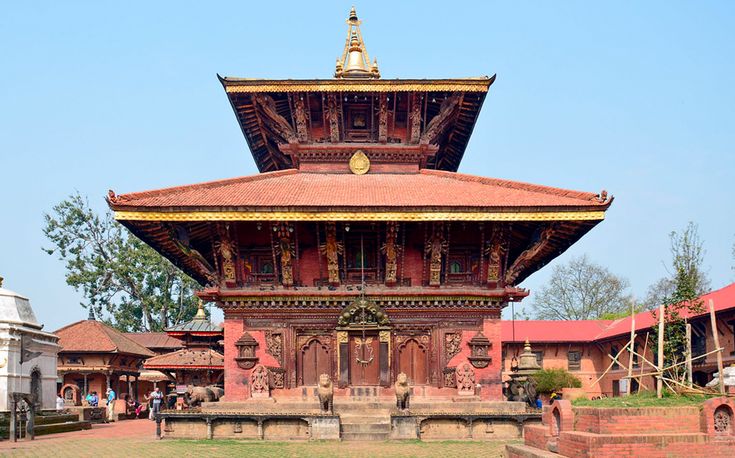
Dating rests on style rather than on an inscription at the image itself, and Licchavi-period attribution in the range of the seventh century is the standard scholarly reading. Some accounts link the commission to a Licchavi king of the mid-seventh century. Treat the precise date as unsettled and the period as secure. For comparison, the other great early Vaishnava site of the valley is the hilltop temple of Changu Narayan, which carries the oldest dated inscription in Nepal and holds a related group of Licchavi sculptures.
Why is a Vishnu temple called Nilkantha, a name for Shiva?
This is the most interesting thing about the site and it confuses almost every visitor. Nilkantha means blue throat and is an epithet of Shiva, earned when he swallowed the poison churned up from the cosmic ocean and held it in his throat rather than let it destroy the world. Budha here is generally taken as the Nepali word for old rather than a reference to the Buddha. So the popular name of the shrine, old blue throat, belongs to Shiva while the image is unmistakably Vishnu.
The connection runs through the same myth. In the Nepali telling, Shiva burned with the poison and struck the mountainside north of the valley with his trident to release water, creating the high lake of Gosaikunda at about 4,380 metres. Believers hold that the water at Budhanilkantha comes from that source, and there is a widely repeated tradition that a stone form of Shiva lies beneath the water at Gosaikunda and is visible when the level drops. In practice many Nepali devotees treat Budhanilkantha as a place where the two great deities meet, which is a very Kathmandu Valley solution to a theological problem.
One further piece of local lore matters. The reigning king of Nepal traditionally did not visit Budhanilkantha, because of a belief that a monarch who looked on the image would die. The monarchy ended in 2008 and the tradition is now a historical curiosity, but it is still recounted at the site and it explains the existence of a second, smaller copy of the image elsewhere in the valley.
What is Doleshwor Mahadev and why does Kedarnath matter?
Doleshwor Mahadev is a modest shikhara-style Shiva temple at Sipadol, in the southeastern part of Bhaktapur district, standing in a walled compound in open farmland rather than in a dense temple town. Architecturally it is not remarkable. Its significance is entirely about identification, and it is recent, specific and datable.
In the Panch Kedar cycle of legends, the Pandava brothers of the Mahabharata sought Shiva to be absolved after the war, and Shiva, avoiding them, took the form of a bull and dived into the ground. Different parts of the body then emerged at five places in the Garhwal Himalaya of present-day India, with the hump appearing at Kedarnath. The head was said to have surfaced in Nepal, and for centuries the location of the head was disputed or simply unfixed. In August 2009 the head priest of Kedarnath publicly recognised Doleshwor Mahadev as that site, which completed the cycle and immediately changed the temple from a local shrine into a pilgrimage destination on the Indian Kedarnath circuit.
The practical effect is visible on the ground. Indian pilgrim groups now arrive by bus, particularly during the Kedarnath season and around Mahashivaratri, and facilities at the site have expanded. It remains a quiet place on most days, and it is not a substitute for the great valley temple complexes. Visit it for what it is: a small shrine that acquired an enormous religious meaning within living memory.
How do the two shrines compare?
They sit on opposite sides of the city and reward completely different attention. The table sets out what each one offers so you can decide whether to do both in a day or pick one.
| Feature | Budhanilkantha | Doleshwor Mahadev |
|---|---|---|
| Location | Foot of the Shivapuri hills, northern valley rim | Sipadol, southeastern Bhaktapur district |
| Distance from central Kathmandu | About 9 km north, 30 to 50 minutes | About 20 km southeast, 60 to 90 minutes |
| Main deity | Vishnu as Jalasayan Narayan, reclining on Shesha | Shiva, venerated as the head of Kedarnath |
| Age | Image generally dated to the Licchavi period, around the 7th century | Older local shrine; identification with Kedarnath made in August 2009 |
| Main festival | Haribodhini Ekadashi in October or November | Mahashivaratri in February or March |
| Best time of day | Early morning for worship, or late afternoon for quiet | Morning; it is often almost empty on weekdays |
| Time needed | 45 to 60 minutes | 30 to 45 minutes |
Can non-Hindus visit, and what are the rules?
Both sites admit visitors of any faith to the compound. At Budhanilkantha the image is viewed from a terrace above the tank, and that terrace is where everyone stands, so a non-Hindu visitor sees essentially what a devotee sees; only priests descend to the water to bathe and dress the image. At Doleshwor there are no unusual restrictions either. In both places remove your shoes at the marked point, leave leather belts and bags outside the precinct, dress to cover shoulders and knees, and do not photograph the priests at ritual without permission.
Mornings are the working hours of both temples. Budhanilkantha is busiest at dawn, when the image is bathed and dressed, and on Ekadashi days, the eleventh day of each lunar fortnight, which are sacred to Vishnu. The great annual occasion is Haribodhini Ekadashi in the month of Kartik, October or November, marking Vishnu waking from the four-month cosmic sleep; the crowd that day is very large and continues through the night. Doleshwor fills at Mahashivaratri in February or March, the same festival that brings hundreds of thousands to Pashupatinath.
How do you fit both into one day?
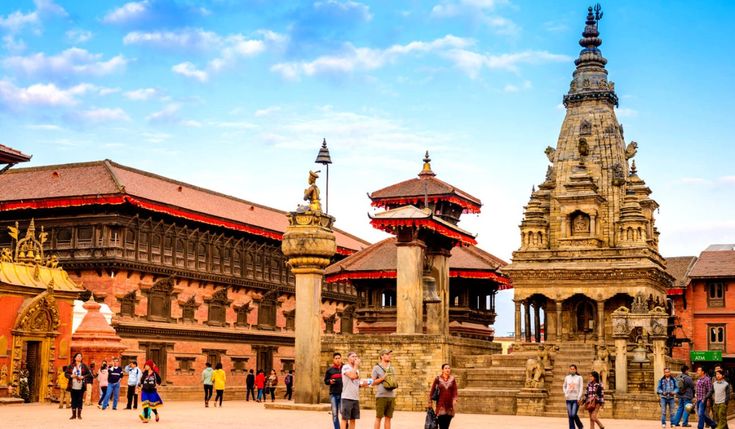
Take Budhanilkantha first, arriving between six and eight in the morning while the ritual is active and the traffic is light. Allow an hour. Then cross the northeastern side of the city towards Bhaktapur, which takes 60 to 90 minutes depending on the ring road, and reach Doleshwor by late morning; it is signposted from Sipadol and a local driver will know it. Allow 45 minutes. That leaves the whole afternoon for the temple squares of Bhaktapur, which are ten minutes away and easily the best use of the remaining daylight.
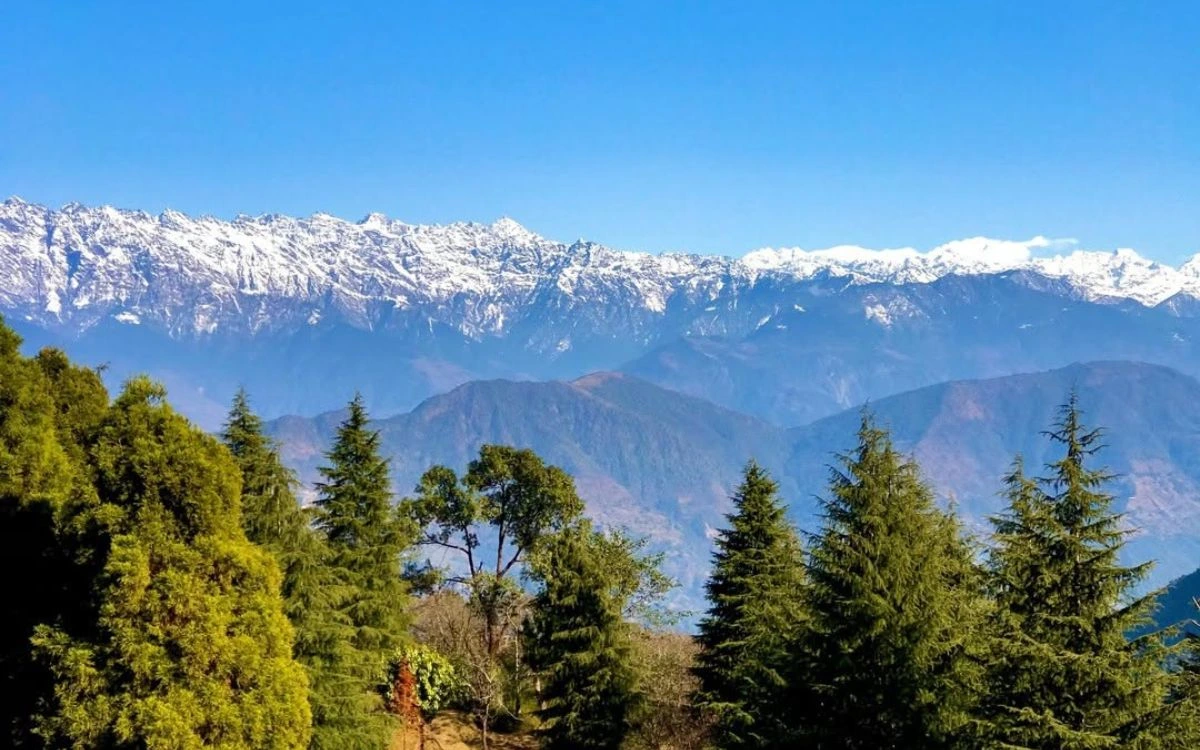
Both stops need a private vehicle to work as a pair; public transport reaches each of them but not efficiently in sequence. If you are staying north of the city, note that the Budhanilkantha gate is also the main southern access point for Shivapuri Nagarjun National Park, and the trail from there to Nagi Gompa and the Shivapuri ridge is one of the best half-day walks in the valley. Doing the temple at dawn and the ridge afterwards is a strong combination for anyone acclimatising before a trek.
When is the best time of year to go?
October to April is the reliable window for both shrines, with clear skies, cool mornings and the least dust. Late October and November are the strongest weeks of all, and they coincide with Haribodhini Ekadashi at Budhanilkantha, which is worth planning around if you want to see the site at full ritual intensity rather than as a quiet monument. February and March bring Mahashivaratri, when Doleshwor is busy with pilgrim groups.
The monsoon, from mid-June to mid-September, is not a problem for these two sites in the way it is for mountain travel, since both are short drives on paved roads and both are attractive in rain. May and early June are simply hot, so shift the visit to first light. Avoid the middle of the day year-round: the terrace at Budhanilkantha has limited shade and the light for photography is poor.
FAQ
How old is the Budhanilkantha statue?
The reclining Vishnu is generally dated to the Licchavi period, around the seventh century, on stylistic grounds rather than from an inscription at the image itself. It is carved from a single block of dark stone, stands roughly five metres long and is one of the largest single-stone sculptures in Nepal.
Why is Budhanilkantha named after Shiva if the image is Vishnu?
Nilkantha, blue throat, is an epithet of Shiva from the myth in which he swallowed the poison churned from the cosmic ocean. The same myth explains the creation of Gosaikunda lake, whose water is traditionally said to feed the tank here, so the site is popularly understood as a place where the two deities meet.
Can non-Hindus enter Budhanilkantha and Doleshwor Mahadev?
Yes, both compounds are open to visitors of any faith. At Budhanilkantha everyone views the image from the terrace above the tank and only priests enter the water. Remove shoes at the marked point, leave leather items outside and dress to cover shoulders and knees.
Why is Doleshwor Mahadev linked to Kedarnath?
In the Panch Kedar legend the head of Shiva in bull form surfaced in Nepal while the other parts appeared in Garhwal. In August 2009 the head priest of Kedarnath recognised Doleshwor Mahadev at Sipadol in Bhaktapur as that site, which put the temple on the Indian Kedarnath pilgrimage circuit.
How long do you need for both temples?
About four hours in total with a private vehicle, including 45 to 60 minutes at Budhanilkantha, 30 to 45 minutes at Doleshwor and 60 to 90 minutes of driving between them. Start at dawn in the north and finish in Bhaktapur, leaving the afternoon for the durbar square.