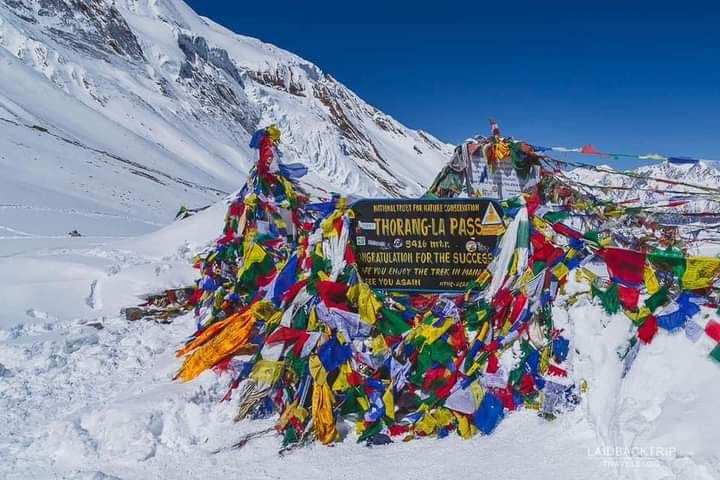
Thorong La, the high point of the Annapurna Circuit, sits at 5,416 m. Kala Patthar, the viewpoint most Everest trekkers climb on their final morning, is around 5,545 m. At those elevations roughly half the oxygen you would get in a sea-level breath actually reaches your bloodstream. Nothing about the air has changed chemically. It is still about 21 percent oxygen, the same as it is in Kathmandu. What has fallen is barometric pressure, and pressure is the force that pushes oxygen across the wall of the lung and into the blood.
That one fact explains most of what matters about altitude sickness in Nepal. It also explains why the illness is so poorly correlated with fitness. Marathon runners get it. Sedentary smokers sometimes sail through. Susceptibility is largely individual, largely inherited, and mostly unpredictable in advance, which is why the defence has to be procedural rather than physical. Go up slowly. Sleep low. Learn the warning signs before you need them.
What altitude sickness actually is
The medical term for the underlying condition is hypobaric hypoxia: low pressure, low oxygen delivery. The body notices within minutes. Chemoreceptors in the neck detect the drop and drive you to breathe faster and deeper, which is the single most important early defence. Faster breathing also blows off carbon dioxide, which makes the blood more alkaline, which in turn tells the brain to slow breathing back down. Those two signals fight each other for the first day or two at any new elevation, and that internal argument is part of why sleep is broken and dreams are strange on the first night in a high village.
Meanwhile blood flow to the brain increases, small vessels leak slightly more fluid than usual, and pressure inside the rigid box of the skull creeps up. That is the working explanation for the headache that defines mild altitude illness. In the lungs, low oxygen causes arteries to constrict rather than dilate, which is the opposite of what happens elsewhere in the body. In some people that constriction is patchy and severe, driving pressure up in the sections that stay open and forcing fluid into the air spaces. The result is the most dangerous of the altitude conditions.
Three conditions worth knowing by name
Acute mountain sickness, usually shortened to AMS, is the common one. It is a headache plus at least one of nausea, dizziness, unusual fatigue or poor sleep, appearing several hours to a day after arriving somewhere higher. It feels like a hangover without the night before. AMS is not dangerous in itself, but it is a clear signal that acclimatisation has not caught up with the ascent, and it must never be treated by climbing higher.
High altitude cerebral oedema, or HACE, is what AMS becomes if it is ignored. The tell is neurological rather than painful: the walker cannot stand heel-to-toe in a straight line, becomes confused, slurs words, or behaves oddly and insists nothing is wrong. High altitude pulmonary oedema, or HAPE, is fluid in the lungs. The tell is breathlessness at rest, a dry cough that turns wet, a sudden collapse in walking speed, and blue-tinged lips. Both are emergencies. Both are treated the same way to begin with, which is immediate descent, and both can kill within hours if descent is delayed until morning for convenience.
Where trekkers in Nepal actually meet altitude
Risk begins in practice above roughly 2,500 m and climbs steeply from around 3,500 m. The figures below are the elevations that shape the standard itineraries, and reading them as a profile rather than a list is the point. Almost every serious case in Nepal traces back to a single day where sleeping elevation jumped too far, or a flight that delivered a walker straight to a height their body had never seen.
| Place | Trail | Approximate elevation | Why it matters |
|---|---|---|---|
| Namche Bazaar | Everest | 3,440 m | First standard rest day on the route |
| Dingboche | Everest | 4,410 m | Second rest day in most sensible itineraries |
| Gorak Shep | Everest | 5,164 m | Highest lodge settlement on the trail |
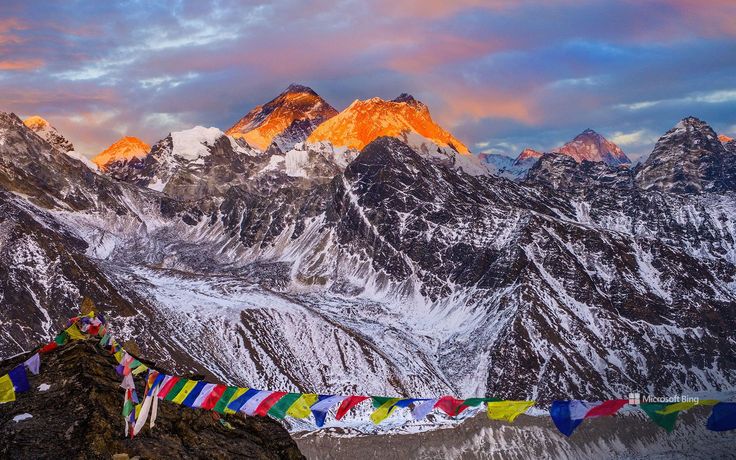
| Kala Patthar | Everest | 5,545 m | Climbed as a day trip, never slept on |
| Manang | Annapurna | 3,519 m | The rest day that makes the pass survivable |
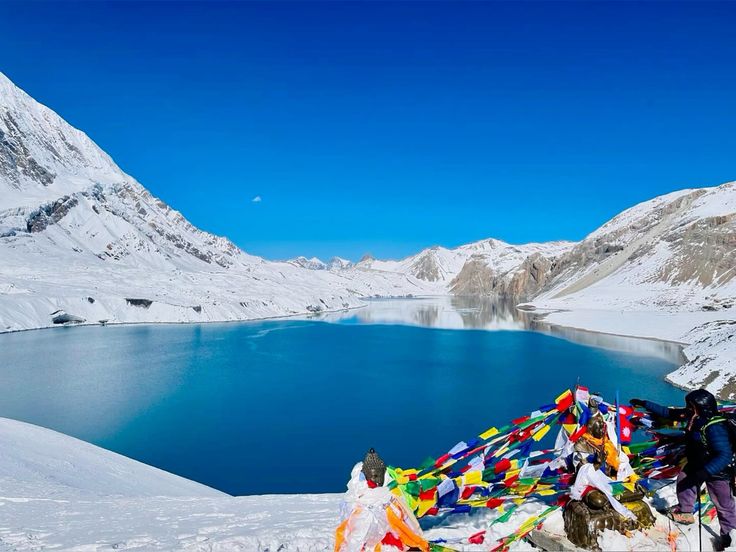
| Tilicho Lake | Annapurna | 4,919 m | Side trip frequently attempted too early |
| Thorong La | Annapurna | 5,416 m | Highest point of the circuit, crossed in one push |
| Gosaikunda | Langtang | 4,380 m | Reached quickly from low, warm valleys |
| Rara Lake | Mugu | 2,990 m | Below the usual threshold, but flown into directly |
The Annapurna and Everest routes are the ones with the deepest institutional memory around this problem, which is one reason the walk to Everest Base Camp has a well-worn acclimatisation rhythm built into it. Quieter routes do not. On the Annapurna Circuit the road now reaches high into the valley, and a jeep can put a walker at Manang in a day from a starting point where oranges grow. The trail did not get more dangerous. The transport got faster than human physiology.
How the body acclimatises, and how long it takes
Acclimatisation is a sequence, not a switch. Breathing adjusts within hours. Over the following days the kidneys excrete bicarbonate, which allows that faster breathing to continue without the blood becoming too alkaline. Plasma volume drops, so the red cells you already have become more concentrated. Only after that does the marrow respond to erythropoietin and begin producing genuinely new red cells, a process measured in weeks rather than days. A two-week trek therefore never completes acclimatisation. It buys enough of it to function.
The ascent rules that actually work
Above about 3,000 m, increase your sleeping elevation by no more than roughly 300 to 500 m per day, and take a full rest day for every 1,000 m gained. Where you sleep is what counts. Walking high during the day and returning to a lower village to sleep is not only allowed, it is actively useful, and it is why the classic Everest rest days involve a hard uphill walk rather than a lie-in. Drink enough that urine stays pale. Skip alcohol and sleeping pills at altitude, both of which suppress breathing at exactly the wrong moment. Eat carbohydrate even when appetite disappears, because appetite loss above 4,000 m is close to universal and undereating turns an ordinary day into a miserable one.
The hardest rule is social. Never leave a sick person to rest alone and never let a group schedule make the decision for them. In Nepal the pressure is usually a return flight, a booked jeep, or a friend who feels fine. None of those outrank a confused walker at 4,800 m.
Medication, oxygen and what they do not fix
Acetazolamide is the standard preventive drug. It works by mildly acidifying the blood, which lets the breathing response run harder without being switched off, effectively accelerating a process the body would eventually manage alone. Dexamethasone suppresses the swelling of severe altitude illness, and nifedipine is used for pulmonary oedema. All three have real side effects, real contraindications, and should only be carried after a conversation with a doctor who knows your history and can advise on dosing. Nothing here is a prescription.
Portable pressure bags and bottled oxygen buy time in a lodge at midnight. They do not replace descent. The one treatment that reliably reverses altitude illness is losing elevation, and even 500 to 1,000 m of descent often produces dramatic improvement before dawn. If you remember one line from this article, make it that one.
Practical information for trekkers in Nepal
Buy travel insurance that explicitly covers trekking to the maximum elevation on your itinerary and includes helicopter evacuation. Read the elevation ceiling in the policy wording rather than the marketing page. Carry a written record of any medication you take and any pre-existing condition, in English, where a companion can find it.
Build slack into the calendar. Two spare days at the end of a trek turn a forced rest day into an inconvenience rather than a crisis. Flights into high airstrips are weather dependent across much of the country, so a fixed international connection immediately after a mountain flight is a recipe for pushing on when you should not. Seasonal timing matters too, both for the weather windows and for how busy the acclimatisation villages will be, and the seasonal guide to western Nepal covers how those windows shift from east to west. Finally, walk with someone. Altitude illness is notoriously hard to self-diagnose, precisely because the organ doing the diagnosing is the one being affected.
FAQ
At what elevation does altitude sickness usually start in Nepal?
Symptoms are uncommon below about 2,500 m and become progressively more likely above 3,500 m. That puts almost every popular Nepali trekking route into the range, including sections of the Everest, Annapurna, Manaslu and Langtang trails, and the high passes of Dolpa and Humla.
Does being fit protect me from altitude sickness?
No. Fitness helps you walk further and recover faster, but it does not change how quickly your body adapts to low pressure. Fit trekkers are arguably at slightly higher risk because they can outpace a safe ascent profile without feeling strained.
How fast should I gain elevation on a Nepal trek?
Above roughly 3,000 m, aim for no more than 300 to 500 m of additional sleeping elevation per day, with a rest day for every 1,000 m gained. Day walks higher than your overnight stop are fine and are part of the standard approach.
What should I do if a member of my group gets confused or breathless at rest?
Descend immediately, at night if necessary, with a companion. Confusion, loss of coordination and breathlessness at rest suggest severe altitude illness, which does not improve by waiting. Oxygen and medication are holding measures on the way down, not alternatives to descending.
Can I fly straight into a high airstrip in Nepal?
You can, and many itineraries do, but arriving by air removes the gradual gain that a walk-in provides. Plan an easy first day and an extra night near the airstrip before continuing upward, and treat any headache on that first evening as a reason to hold position.