The twelve places worth going out of your way for in Western Nepal are Rara Lake, Shey Phoksundo, Khaptad, Bardiya, Shuklaphanta, the Limi Valley, Ramaroshan, Jumla, Badimalika, Surkhet, Api Base Camp and Dhorpatan. Each costs at least one extra travel day at either end. That cost is the reason they are still quiet.
This list is ordered by how much effort each one takes, not by how good it is, because effort is the variable that actually decides where you end up going.
The twelve, at a glance
| Place | District | Elevation | Getting there from Kathmandu | Days needed |
|---|---|---|---|---|
| Bardiya National Park | Bardiya | About 150 m | Fly to Nepalgunj, then 2 to 3 hours by road | 3 to 4 |
| Shuklaphanta National Park | Kanchanpur | About 180 m | Fly to Dhangadhi, then about 2 hours by road | 3 |
| Surkhet valley | Surkhet | About 700 m | Direct flight, or a long day by road | 2 to 3 |
| Jumla Khalanga | Jumla | About 2,540 m | Fly via Nepalgunj | 2 to 3 |
| Khaptad National Park | Doti, Bajura, Bajhang, Achham | Around 3,000 m | Fly to Dhangadhi, road, then 2 days walking | 6 to 8 |
| Ramaroshan | Achham | Around 2,800 m | Fly to Dhangadhi, then a long road day | 4 to 5 |
| Rara Lake | Mugu | About 2,990 m | Fly via Nepalgunj to Jumla or Talcha, then walk | 6 to 8 |
| Badimalika | Bajura | Around 4,200 m | Fly to Dhangadhi or Bajura, then 2 to 3 days walking | 7 to 9 |
| Dhorpatan Hunting Reserve | Baglung, Rukum, Myagdi | 2,850 to 5,500 m | Road via Pokhara or Burtibang | 8 to 12 |
| Shey Phoksundo | Dolpa | About 3,611 m | Fly via Nepalgunj to Juphal, then 2 days walking | 9 to 12 |
| Api Base Camp | Darchula | Around 4,100 m | Fly to Dhangadhi, long road, then trek | 12 to 14 |
| Limi Valley | Humla | 3,500 to 4,900 m | Fly via Nepalgunj to Simikot, then trek | 18 to 22 |
The easy ones: three days from Kathmandu
Bardiya National Park is the best tiger tracking in Nepal, and the reason is boring and structural: fewer visitors, denser sal forest, and tracking done on foot with a guide along the Karnali floodplain rather than from a line of jeeps. You will also see rhino, wild elephant and gharial. Three nights is the sensible minimum, because tiger sightings are a numbers game and one morning is not enough. The practical detail is in our Bardiya guide.
Shuklaphanta National Park, in the far south-west, protects the largest continuous grassland in Nepal, and holds one of the world's largest herds of swamp deer. In March the grass is short and the viewing is best. It sees a small fraction of Bardiya's visitors, which is saying something.
Surkhet is where most people change transport rather than stop, which is a shame. The Birendranagar valley at about 700 metres is warm, flat and green, and it holds Kakrebihar, a twelfth-century Buddhist and Hindu site on a hill above the town. There is also a Vipassana centre here, covered in our piece on Vipassana in Surkhet.
The mid-range: five to eight days
Jumla Khalanga sits at about 2,540 metres in a broad valley, and is the road and air head for the whole of upper Karnali. It is worth a day in its own right for the terraced fields, which are among the highest paddy fields grown anywhere, and for the marsi rice they produce. Most people treat it as the start of the walk to Rara, and it repays a rest day before you gain more height.
Khaptad National Park is unlike anywhere else in Nepal: a rolling grassland plateau at around 3,000 metres, cut by shallow streams and patched with rhododendron, spread across four districts. It has no big peaks and no lake worth the name, and it is still one of the most memorable places in the country, largely because the landform is so unexpected. Getting there means walking in for two days from the nearest road head, which is what keeps it empty.
Ramaroshan, in Achham, is a scatter of small lakes and meadows at around 2,800 metres that almost no foreign visitor reaches. The road is rough, and the walking above it is gentle. Our Ramaroshan guide has the approach detail.
The practical shape of a Khaptad trip is worth spelling out, because it is the one people most often underestimate. You fly to Dhangadhi, drive four to six hours to a road head at Silgadhi or Jhingrana depending on the season, then walk two days up onto the plateau, where accommodation is a park guesthouse or a tent. There is no teahouse chain, no shop and no signal. Coming down is faster. Budget six to eight days from Kathmandu and back, and do not attempt it in a five-day window.
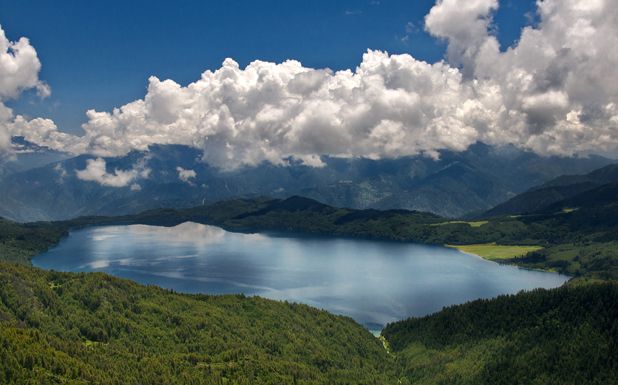
Rara Lake is the one most people have heard of and still almost nobody visits. It is 10.8 square kilometres at about 2,990 metres, inside the smallest national park in Nepal, ringed by blue pine and rhododendron with high ridges behind. The classic approach walks in from Jumla over two to three days; the short version flies into Talcha airstrip, weather permitting, and walks a couple of hours. Take the long way if you have the days, because the walk in is much of the point.
The committing ones: nine days and up
Badimalika, in Bajura, is a temple at around 4,200 metres on an open ridge, reached on a pilgrimage walk that Nepali devotees do in large numbers at Janai Purnima in August and that foreigners almost never do at all. The meadows below it are the draw.
Dhorpatan Hunting Reserve is the only hunting reserve in Nepal, straddling Baglung, Rukum and Myagdi, with high pasture from 2,850 metres up past 5,000. It is an odd, quiet, large landscape, and access is by road from Pokhara or Burtibang rather than by air.
Shey Phoksundo is the deepest lake in Nepal at around 145 metres, sitting at about 3,611 metres in Dolpa. The colour is genuinely unusual and the waterfall at its outflow is the tallest in Nepal. Reaching it needs national park entry, and parts of Dolpa fall under restricted-area rules charged per person per week, so confirm with an agency exactly which permits your route needs. Our Shey Phoksundo guide covers the lake and the largest national park in Nepal around it.
Api Base Camp, in Darchula, sits below the highest peak in the far west at 7,132 metres, inside the Api Nampa Conservation Area. It is a long way from anything: fly to Dhangadhi, drive most of a day up the Mahakali, then walk.
The Limi Valley in Humla is the most demanding trip in this list. Three weeks, a restricted-area permit, a registered agency, a licensed guide and generally a minimum of two trekkers, through Tibetan Buddhist villages in a district with no road link to the rest of Nepal. Our Limi Valley guide sets out what it involves.
What these places cost you
The pattern is consistent: everything here costs a flight to Nepalgunj or Dhangadhi first, then either a small aircraft or a long road day, then often walking. Small aircraft to Juphal, Jumla, Simikot and Talcha cancel for weather, and a two-day delay at either end is normal rather than unlucky. Build the spare days in. The mechanics of the journey are in how to get to West Nepal.
Money is the other constraint people underestimate. Cash machines exist in Nepalgunj, Dhangadhi, Birendranagar and the larger district headquarters, and nowhere beyond them. Carry Nepali rupees in small notes for anything north of the road head. We break the daily figures down in our guide to Nepal travel costs by season.
When to go, which is not the same answer as elsewhere
October and November are the safe choice: clear air, settled weather and the best chance that a mountain flight actually departs. April and May are warmer, hazier in the lowlands, and give you rhododendron in flower through the mid-hills, which on the walk from Jumla towards Rara is worth planning around.
December to February closes the high passes and makes Rara and Khaptad cold and sometimes snowbound, though the Tarai parks are at their best and Bardiya in January is excellent. June to September is the monsoon everywhere except the trans-Himalayan strip, where Upper Dolpa and Humla sit in the rain shadow and are perfectly workable while the rest of Nepal is under cloud. That inversion is the single most useful thing to know about timing a western trip, and it is set out in our seasons guide.
Who should skip this region
If you have ten days, want teahouse comfort, and have never trekked, Annapurna is a better first Nepal trip and there is no shame in saying so. Western Nepal rewards people with time, tolerance for uncertainty and a reason to want an empty trail. If that is not this trip, come back for it.
Frequently Asked Questions
What are the best places to visit in Western Nepal?
Rara Lake in Mugu, Shey Phoksundo in Dolpa, Khaptad National Park in the far west, Bardiya and Shuklaphanta national parks in the Tarai, and the Limi Valley in Humla. Ramaroshan, Jumla, Badimalika, Dhorpatan, Api Base Camp and the Surkhet valley round out the list.
How do I get to Western Nepal?
Fly from Kathmandu to Nepalgunj for Karnali, or to Dhangadhi for the far west. From Nepalgunj, small aircraft continue to Juphal for Dolpa, Jumla or Talcha for Rara, and Simikot for Humla. Overland, the Karnali Highway runs north from Surkhet.
Is Rara Lake worth visiting?
Yes, if you have six to eight days for it. It is the largest lake in Nepal at roughly 10.8 square kilometres and about 2,990 metres, inside the smallest national park in the country, and it sees very few visitors. The walk in from Jumla is a large part of the experience.
Do I need a permit for Western Nepal?
It depends where. National park and conservation area entry permits apply to Rara, Shey Phoksundo, Khaptad, Bardiya, Shuklaphanta and Api Nampa. Upper Dolpa, the Limi Valley in Humla and parts of Mugu additionally require a restricted-area permit, a registered agency and a licensed guide.
How many days do I need for Western Nepal?
Three to four days for a Tarai park, six to eight for Rara or Khaptad, nine to twelve for Shey Phoksundo, and around three weeks for the Limi Valley. Add two spare days to any itinerary that uses a mountain airstrip.
Is Western Nepal safe to travel in?
Yes, in ordinary terms. The genuine risks are altitude, rough roads and distance from medical help. On remote high routes a guide is worth having for navigation and logistics even where the law does not require one.
When is the best time to visit Western Nepal?
October and November for clear weather across the region, and April and May for rhododendron in the mid-hills. Upper Dolpa and Humla sit in the monsoon rain shadow, so July and August are viable there when the rest of Nepal is not.