Two travellers can walk the same trail, eat the same food and sleep in the same lodges four months apart and come home with budgets that differ by a third. Nothing about the route changed. The calendar did.
Nepal has a sharply seasonal tourism economy with two peaks and two troughs, and almost every variable cost in a trip responds to that curve. Understanding which line items move with demand and which ones do not is the single most useful thing you can do before booking. This guide does not quote figures, because permit rates, flight prices and lodge tariffs all change and any number printed here would be wrong within a year. It explains the structure instead.
What actually drives the cost of a trip to Nepal?
Break a Nepal budget into eight lines and the picture clarifies immediately. Some of these are effectively fixed by regulation or by distance and will not move whatever month you arrive. Others are pure supply and demand and can swing dramatically.
| Cost line | Fixed or seasonal | What moves it |
|---|---|---|
| International flights | Strongly seasonal | Peak trekking months and the Dashain and Tihar holiday period |
| Visa on arrival | Fixed | Government rate by duration, unchanged by season |
| Park and conservation permits | Fixed | Government rate, revised occasionally, same all year |
| Restricted area permits | Fixed but high | Set per area and per day; some areas cost far more than others |
| Domestic flights | Strongly seasonal | Lukla, Jomsom, Simikot and Juphal load up in peak season |
| Guide and porter wages | Moderately seasonal | Scarcity of experienced staff in October and April |
| City hotels | Strongly seasonal | Kathmandu and Pokhara occupancy swings hard between peak and monsoon |
| Teahouse rooms and food | Mildly seasonal, strongly altitudinal | Rooms stay cheap; food rises with every hour a porter or mule carries it uphill |
The pattern in that table is worth sitting with. The government-set costs do not care what month it is. The market-set costs care enormously. So the way to reduce a Nepal budget is not to skip permits or downgrade lodges, it is to move the dates.
How the seasons compare in Nepal
Nepal runs on four seasons with two of them split by useful shoulder weeks. Autumn and spring are the peaks. Winter and monsoon are the troughs, for opposite reasons and with opposite trade-offs.
| Season | Months | Conditions | Demand and price pressure | Best suited to |
|---|---|---|---|---|
| Early autumn | September | Monsoon tailing off, green hills, some cloud | Rising but not yet peak | Photographers, budget-conscious trekkers |
| Peak autumn | October to mid November | Clearest skies of the year, stable weather | Highest of the year, book far ahead | First-time trekkers, everyone else too |
| Late autumn shoulder | Late November to early December | Still clear, cold at altitude, thinning crowds | Falling fast | Value seekers who can handle cold nights |
| Winter | Mid December to February | Cold, high passes closed, superb visibility low down | Lowest for lodges and hotels | Terai wildlife, low-altitude treks, culture |
| Spring | March to May | Rhododendron in bloom, warming, haze building | Second peak, close to autumn levels | Trekkers who want flowers and warmth |
| Monsoon | June to August | Heavy rain, leeches, cloud, landslide risk | Lowest of the year across the board | Rain shadow trekking, valley culture, slow travel |
Why autumn costs the most
October is the month everything converges. The monsoon has cleared, visibility is at its annual best, the major Nepali festivals fall in this window, and the entire global trekking market has known all of this for fifty years. International and domestic flights price accordingly, Kathmandu hotels fill, and experienced guides are booked months in advance.
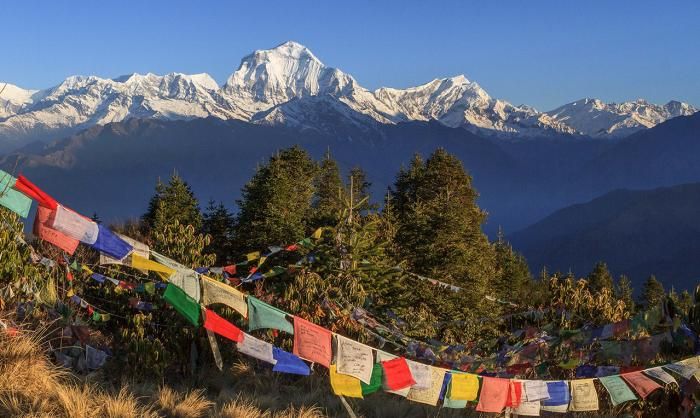
The pressure is not evenly distributed. It concentrates on the Everest and Annapurna corridors and on the flights that serve them. A Lukla seat in mid-October is a genuinely scarce commodity, and weather cancellations compound the problem by pushing displaced passengers into subsequent days. If you must travel in peak autumn, the money-saving lever available to you is destination rather than date: a region that nobody is competing for prices normally even in the busiest month.
Where the quiet months save real money
Winter is the most underrated season in Nepal and the cheapest for anything below about three thousand metres. Kathmandu and Pokhara hotels discount heavily. Air is clear and cold, so mountain views from the mid hills are often better in January than in April. The Terai parks are at their best: Bardiya and Chitwan both have their strongest wildlife viewing in the dry months, and grass is short enough to see through. The cost is genuine cold at night in unheated lodges and closed high passes.
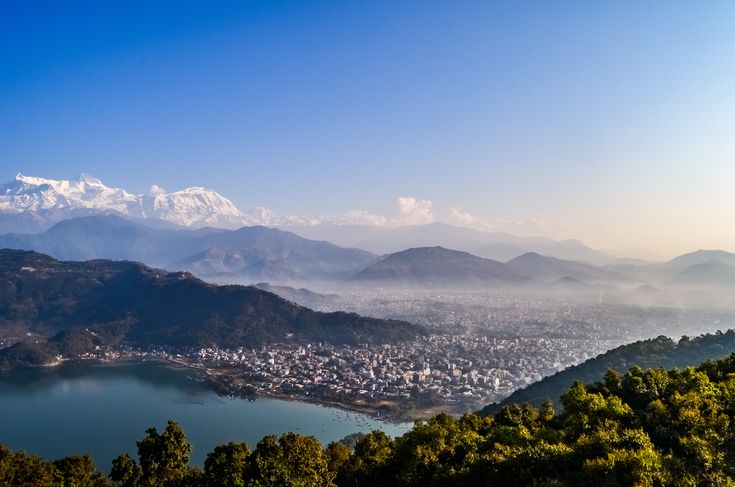
The monsoon is cheaper still, and it is not the write-off most itineraries assume. Trails in the rain shadow behind the main Himalayan wall stay walkable while everywhere else drowns, which is why Upper Mustang, Dolpo and Nar Phu are summer destinations rather than autumn ones. In the valleys, the monsoon is when the country is at its most alive and least photographed, with rice transplanting under way across the middle hills. Pokhara in July is empty, green and cheap, with a fifty per cent chance of seeing the mountains on any given morning.
Costs that surprise people
Food on a trek costs more than the bed, often several times more. Lodges price rooms low because they make their margin on meals, and meal prices climb steadily with altitude because everything has been carried, flown or muled in. A plate of dal bhat at the trailhead and the same plate five days higher are not the same product economically. Budgeting the same daily food figure for the whole trek is the commonest error in trekking budgets.
Charging, hot water and wifi are usually billed separately at altitude, and the charges stack. Carrying a power bank and accepting cold water for a few days removes a surprising amount from the total. Bottled water is both expensive and an environmental problem on the trails; a filter or purification tablets pay for themselves within days.
Domestic flight disruption is a budget item, not just an inconvenience. Lukla, Jomsom, Simikot and Juphal all cancel for weather with some regularity, and a stranded day costs a hotel night plus a rearranged onward booking. Two spare days at the end of any flight-dependent itinerary is cheaper than a missed international connection. Our guide to reaching west Nepal by flight and road covers the Nepalgunj hub in more detail.
How to build a budget that holds
Work in three blocks. First, the fixed block: visa, permits, international flights, and any restricted area fee. Price this precisely from official sources, because it will not move. Second, the daily block: accommodation, food, guide and porter wages, local transport. Estimate this per day and multiply, adding a clear uplift for days spent above roughly three and a half thousand metres. Third, the contingency block: at least a few days of the daily rate held back for weather, illness and rerouting.
Then check your dates against the season table above. Shifting a trip from mid October to early December, or from April to early September, will often do more for the total than any amount of downgrading. If the dates cannot move, move the destination instead. Our guide to choosing a season in western Nepal sets out where the quiet months are best spent.
FAQ
What is the cheapest time to visit Nepal?
The monsoon months of June to August, followed by winter from mid December to February. Both are low season for hotels, flights and guides, and both remain genuinely viable if you match the destination to the weather rather than forcing a peak-season itinerary.
Why does food cost more the higher you trek?
Because everything is carried up by porter or mule, or flown in. Lodges keep room rates low and recover their costs through meals, so the food line rises steadily with altitude while the bed line barely moves.
Are national park permit fees in Nepal different by season?
No. Park entry and conservation area permits are set by the government at a flat rate and do not vary with the calendar, although the rates themselves are revised from time to time. Check the current figure with the Nepal Tourism Board before you travel.
How much contingency should a Nepal budget include?
Enough to cover several extra days at your normal daily rate, plus one rearranged domestic flight. Weather cancellations on mountain airstrips are routine rather than exceptional, and a trip with no slack in it converts a delay into a missed international connection.
Is it cheaper to book a trek in Kathmandu or before arriving?
Booking locally is often cheaper, but the saving narrows in peak season when good guides are already committed. For restricted areas the question is moot, since permits must be arranged through a registered agency and cannot be issued to individuals.