The best places to visit in Nepal depend entirely on what you came for. For mountain views without a trek, go to Pokhara or Nagarkot. For trekking, Annapurna is the most accessible and Dolpa the most remote. For wildlife, Bardiya beats Chitwan for tigers. For temples and old cities, the Kathmandu Valley has no rival anywhere in the Himalaya.
Most lists of this kind rank fifty places nobody could visit in one trip, and rank them by nothing in particular. This one groups by intent and says where the crowds are, because that is the single biggest variable in whether you enjoy the place when you get there.
If you want mountains without a long trek
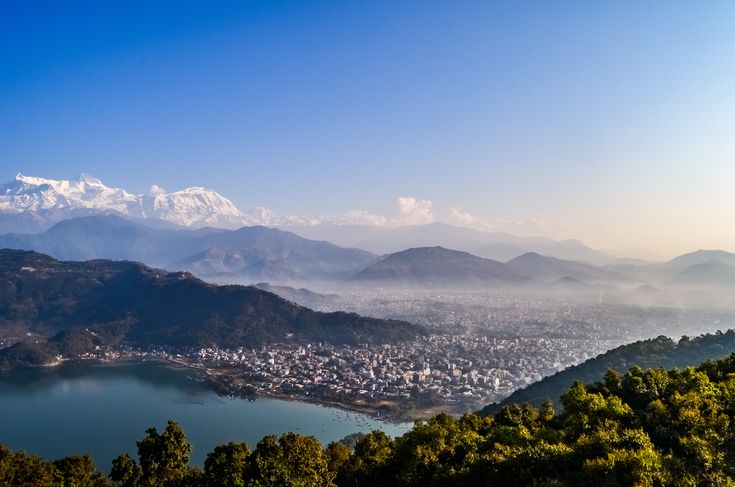
Pokhara is the obvious answer and it earns it. The city sits at about 820 metres on the shore of Phewa Tal, with the Annapurna range and Machhapuchhre filling the northern skyline on a clear morning. You can be there from Kathmandu in about 25 minutes by air, or six to eight hours by road, and see serious mountains without gaining any altitude at all. It is also where every Annapurna trek starts and finishes, so the town is full of gear shops and people comparing blisters.
Nagarkot, on the rim of the Kathmandu Valley at about 2,100 metres, is the short version: a night out of the city, a sunrise over a long line of peaks, back for lunch. It works well when you have three days in Nepal and one of them is spare.
Sarangkot, above Pokhara, is the same idea at closer range, and is where the paragliders launch. Go early. By nine the haze usually wins.
If you want to trek
This is where honesty matters most, because the two famous options are also the two busiest.
| Region | Typical trip length | How busy | Accommodation |
|---|---|---|---|
| Annapurna | 4 to 18 days | Very busy in October and November | Teahouses throughout |
| Everest | 12 to 16 days | Very busy in peak season | Teahouses throughout |
| Langtang | 7 to 10 days | Moderate | Teahouses throughout |
| Manaslu | 14 to 18 days | Quieter; restricted area permit needed | Basic teahouses |
| Rara and Jumla | 7 to 10 days | Very quiet | Basic lodges and camping |
| Dolpa | 10 to 25 days | Almost empty; permits required | Camping on most routes |
| Humla and Limi | 16 to 22 days | Almost empty; permits required | Camping |
Annapurna Base Camp and the Everest Base Camp trail are excellent walks with a real problem: in October and November you will queue at passes, share lodges, and photograph the same viewpoint as forty other people. That does not make them bad. It makes them a different kind of experience from the one the photographs sold you.
The alternatives are not secret, they are simply harder to reach. Manaslu gives you a big Himalayan circuit with a fraction of the traffic. Rara and Jumla give you high lake country in a week. Dolpa and Humla give you trans-Himalayan Tibetan-influenced valleys that see a few hundred foreign trekkers a year between them. All of the western options cost you an extra day of travel at each end and, in the restricted zones, a permit and a guide. If you are weighing that up, we set the two side by side in West Nepal versus Everest and Annapurna.
If you want wildlife
Chitwan is the famous one and it is genuinely good for greater one-horned rhino, which you have a strong chance of seeing. It is also close to the road between Kathmandu and Pokhara, which is why it is busy.
Bardiya, in the western Tarai, is the better park for tigers. It is quieter, the forest is denser, and tracking is done on foot with a guide rather than from a queue of jeeps. Getting there means flying to Nepalgunj and driving, or a long day on the highway. Our Bardiya National Park guide covers how the tracking actually works.
Shuklaphanta, in the far south-west corner, has the largest grassland in Nepal and one of the biggest swamp deer herds in the world. Almost nobody goes. Koshi Tappu, at the other end of the country, is the birdwatching park.
If you want temples, cities and history
The Kathmandu Valley holds seven UNESCO World Heritage monument zones inside an area you can cross in an hour without traffic, which is a qualification worth stating carefully, because there is always traffic.
| Place | What it is | Time needed |
|---|---|---|
| Kathmandu Durbar Square | Royal palace complex and temple square | Half a day |
| Patan Durbar Square | The best-preserved of the three; Newar metalwork | Half a day |
| Bhaktapur Durbar Square | A whole medieval town rather than one square | A full day |
| Pashupatinath | Nepal's most important Hindu temple, on the Bagmati | Two to three hours |
| Boudhanath | One of the largest stupas in the world | Two hours, best at dusk |
| Swayambhunath | Hilltop stupa above the city | Two hours |
| Changu Narayan | The oldest temple in the valley | Two hours |
Bhaktapur deserves the full day and an overnight if you can manage it. The day-trippers leave by four and the town becomes itself again.
Outside the valley, Lumbini is where the Buddha was born, and is a pilgrimage site rather than a scenic one: a large flat monastic park in the Tarai, laid out with a temple built by each Buddhist nation, and best walked or cycled early before the heat. Nearby Tilaurakot, in Kapilvastu, is identified with the Shakya capital where he spent his childhood, and it is an archaeological site with almost nobody at it.
Tansen and Bandipur are hill towns with Newar architecture, cobbled lanes and no crowds, both of which work well as a stop on the road between Kathmandu and the west rather than a destination in themselves. Janakpur, in the eastern Tarai, is the centre of Mithila culture and its painting tradition, and looks and feels more like north India than like Kathmandu.
If you want to get away from other travellers
This is the category Nepal does best and markets worst.
Rara Lake, in Mugu, is the largest lake in Nepal at roughly 10.8 square kilometres, at about 2,990 metres, ringed by pine and rhododendron. Getting there means Kathmandu to Nepalgunj to Jumla by air, then two to three days walking, or a longer road journey. Almost nobody does it.
Khaptad National Park, in the far west, is a rolling grassland plateau at around 3,000 metres, which is an unusual landform in Nepal and unlike anywhere else in the country. Our Khaptad guide covers the ecology and the approaches.
Shey Phoksundo, in Dolpa, is the deepest lake in Nepal at around 145 metres, at about 3,611 metres. Upper Dolpa beyond it needs a restricted-area permit and an agency.
The Limi Valley, in Humla, is the most committing option in the country that does not involve technical climbing: a two to three week loop through Tibetan Buddhist villages with no road access at all.
If you want more of these, we have a longer list in ten undiscovered destinations in West Nepal.
How to actually choose
Pick one region and stay in it. The single most common mistake on a two-week Nepal trip is trying to combine Kathmandu, Pokhara, a trek, Chitwan and Lumbini, which produces five travel days out of fourteen and no time anywhere. Domestic flights cancel, roads are slow, and the buffer you did not build is the buffer you will need. We make the case for the opposite approach in slow travel in Nepal.
Then pick your season. October and November are the clearest and the busiest. March to May is warmer, hazier lower down, and gives you rhododendron forest in bloom. June to September is the monsoon, which rules out most of the country but is the working season in the Dolpa and Humla rain shadow. That inversion is the most useful thing to know about Nepal's calendar, and it is covered in the seasons guide.
Then check what is on. Nepal's festival calendar is lunar, so the dates move every year, and two of them are large enough to reshape a trip. Dashain and Tihar, in roughly September to November, empty the cities as people travel home, shut many businesses for days and make long-distance buses close to unusable. That is worth avoiding if you have a tight itinerary and worth aiming at if you want to see the country at its most itself. Our festival calendar guide has the pattern.
One more principle worth stating plainly, because it decides more trips than any of the above. Nepal is not a country where an ambitious plan survives contact with the schedule. Domestic flights cancel, roads close, and a day lost to weather is a normal event rather than bad luck. Every itinerary that works has slack in it, and every one that does not has a bad final week.
Frequently Asked Questions
What is the number one tourist attraction in Nepal?
By visitor numbers, the Kathmandu Valley heritage sites and the Annapurna region trails. Pashupatinath, Boudhanath and Bhaktapur Durbar Square draw the largest crowds, while Annapurna takes the most trekkers of any region in the country.
Which is better, Chitwan or Bardiya?
Chitwan for convenience and rhino, Bardiya for tigers and quiet. Chitwan sits close to the Kathmandu to Pokhara road; Bardiya needs a flight to Nepalgunj or a long drive, and rewards it with denser forest, fewer jeeps and on-foot tracking.
How many days do you need in Nepal?
Ten to fourteen days is the realistic minimum for a trek plus a city. A week works for the Kathmandu Valley, Pokhara and a short walk. Anything under five days should stay in the valley, because domestic travel days will eat the rest.
Is Pokhara or Kathmandu better?
They do different jobs. Kathmandu has the temples, the old cities and the international airport. Pokhara has the mountain views, the lake and the trailheads. Most itineraries include both, with two or three nights in each.
What is the most beautiful place in Nepal?
There is no single answer, but the strongest candidates outside the famous trekking regions are Rara Lake in Mugu, Shey Phoksundo in Dolpa and the Khaptad plateau in the far west. All three are high, quiet, and take two or three days of travel to reach from Kathmandu.
Can you see the Himalaya without trekking?
Yes. Pokhara, Sarangkot, Nagarkot and Dhulikhel all give long mountain views on a clear morning with no walking involved. Mountain flights from Kathmandu are the other option, weather permitting.
Which places in Nepal are the least crowded?
The western half of the country. Rara, Khaptad, Shey Phoksundo, Shuklaphanta, Bardiya, the Limi Valley and Upper Dolpa all see a tiny fraction of the traffic that Annapurna and Everest handle, mostly because each one costs an extra day of travel at either end.