The West Nepal
DestinationsTrekkingWildlifeWellness
Book a Tour
The West Nepal

Explore the wild frontiers of Nepal — national parks, sacred temples, adventure trails, and authentic western culture.

+977 9866613889info@thewestnepal.liveWhatsApp: +977 9866613889

Explore

  • Blog
  • Tours & Packages
  • Destinations
  • Wellness Tourism
  • Search

Company

  • About Us
  • Contact
  • Privacy Policy

Destinations

  • 50 Must-Visit Places
  • Rara National Park
  • Shey Phoksundo Lake
  • Bardiya National Park
  • Dailekh Temples

Wellness

  • Yoga Retreats
  • Vipassana Meditation
  • Ayurvedic Healing
  • Forest Bathing Bardia
  • Rara Lake Wellness

Nepal Travel Guides by Country & State

USA·UK·Germany·France·Canada·New York·California·Texas·Florida·Colorado

© 2026 The West Nepal. All rights reserved.

+977 9866613889PrivacyContact
Chat on WhatsApp
image fx  6
HomeBlogBlogging
Blogging

#1 The Future of Sustainable Tourism in Nepal: Challenges, Opportunities & Path Forward

May 3, 20259 min read
Back to Blog
ContentsTap to expandTap to collapse
  • Public-Private Partnerships
  • Local Community Involvement
  • Measuring Success in Sustainable Tourism In Nepal
  • Key Performance Indicators
  • Global Benchmarks
  • The Future of Sustainable Tourism in Nepal
  • Emerging Opportunities
  • Technology for Sustainability
  • Youth Involvement
  • Conclusion
  • How You Can Support Sustainable Tourism in Nepal
  • What is the best time to visit Nepal for sustainable tourism?
  • How can I verify if a tour operator in Nepal is truly sustainable?
  • Are there sustainable alternatives to popular trekking routes?

Organizations like WWF Nepal, SNV, and The Mountain Institute provide technical expertise, funding, and capacity building for sustainable tourism initiatives. Their international networks help connect local projects with global markets and best practices.

Public-Private Partnerships

Collaboration between government agencies, private businesses, and local communities creates the foundation for sustainable tourism. The government provides regulatory frameworks while businesses implement practices and communities ensure cultural authenticity.

Local Community Involvement

Sustainable tourism requires that local communities have decision-making power over tourism development in their areas. This ensures tourism respects local values and addresses community needs rather than imposing external visions.

Measuring Success in Sustainable Tourism In Nepal

Key Performance Indicators

Nepal is developing metrics beyond tourist arrivals to measure tourism's true impact:

  • Local employment rates and income levels
  • Percentage of locally-sourced food and materials
  • Waste reduction and renewable energy adoption
  • Wildlife population statistics
  • Cultural preservation metrics

Global Benchmarks

The Global Sustainable Tourism Council (GSTC) Criteria provide international standards against which Nepal's initiatives can be measured, helping the country align with global best practices.

The Future of Sustainable Tourism in Nepal

Emerging Opportunities

Several trends position Nepal for leadership in sustainable tourism:

Eco-Trekking Innovation

Beyond traditional routes, Nepal is developing specialized eco-treks focused on wildlife observation, botanical exploration, and conservation education.

Agrotourism

Nepal's diverse agricultural traditions offer opportunities for farm stays, culinary tourism, and traditional farming demonstrations.

Digital Nomad Hubs

Sustainable Tourism in Nepal with Digital Nomad Hubs

With improving internet connectivity, rural communities are creating co-working spaces that allow international remote workers to contribute to local economies while enjoying Nepal's natural beauty.

Technology for Sustainability
Innovative technologies are enabling more sustainable tourism practices:

  • Mobile apps for waste tracking and reporting
  • Virtual reality experiences for fragile cultural sites
  • AI-powered energy management systems
  • Digital platforms connecting travelers directly with community providers

Youth Involvement

Nepal's young entrepreneurs are launching sustainable tourism ventures combining traditional knowledge with modern business practices. Educational institutions are developing specialized sustainable tourism curricula to prepare the next generation of industry leaders.

Conclusion

As Chief Seattle wisely stated: "Take only memories, leave only footprints." Nepal has the extraordinary opportunity to develop a tourism industry that enhances rather than degrades its natural and cultural treasures. By embracing sustainable practices, the country can ensure tourism benefits reach rural communities while preserving the very attractions that draw visitors.

The path forward requires commitment from all stakeholders—government agencies implementing supportive policies, businesses adopting responsible practices, communities maintaining their authentic traditions, and travelers making conscious choices. Together, these efforts can transform Nepal into a global model for sustainable tourism development.

How You Can Support Sustainable Tourism in Nepal

  • Choose certified eco-friendly tour operators and accommodations
  • Travel during off-peak seasons to reduce crowding
  • Visit lesser-known destinations beyond the typical tourist circuit
  • Respect local customs and environmental guidelines
  • Purchase locally-made products and services
  • Share your sustainable travel experiences to inspire others

For more information on sustainable travel options in Nepal, contact the Nepal Tourism Board's Sustainable Tourism Division at sustainability@ntb.org.np


What is the best time to visit Nepal for sustainable tourism?

The shoulder seasons (October-November and March-April) offer excellent weather while reducing the environmental and social impacts of overcrowding that occur during peak seasons.

How can I verify if a tour operator in Nepal is truly sustainable?

Look for recognized certifications like GSTC, Travelife, or Nepal's own Sustainable Tourism Certification. Research their specific practices regarding waste management, local employment, and community benefits.

Are there sustainable alternatives to popular trekking routes?

Yes, consider the Indigenous Peoples Trail, Tamang Heritage Trail, Balthali Village Trek, or the Helambu Circuit for less crowded, culturally rich experiences that directly benefit local communities.

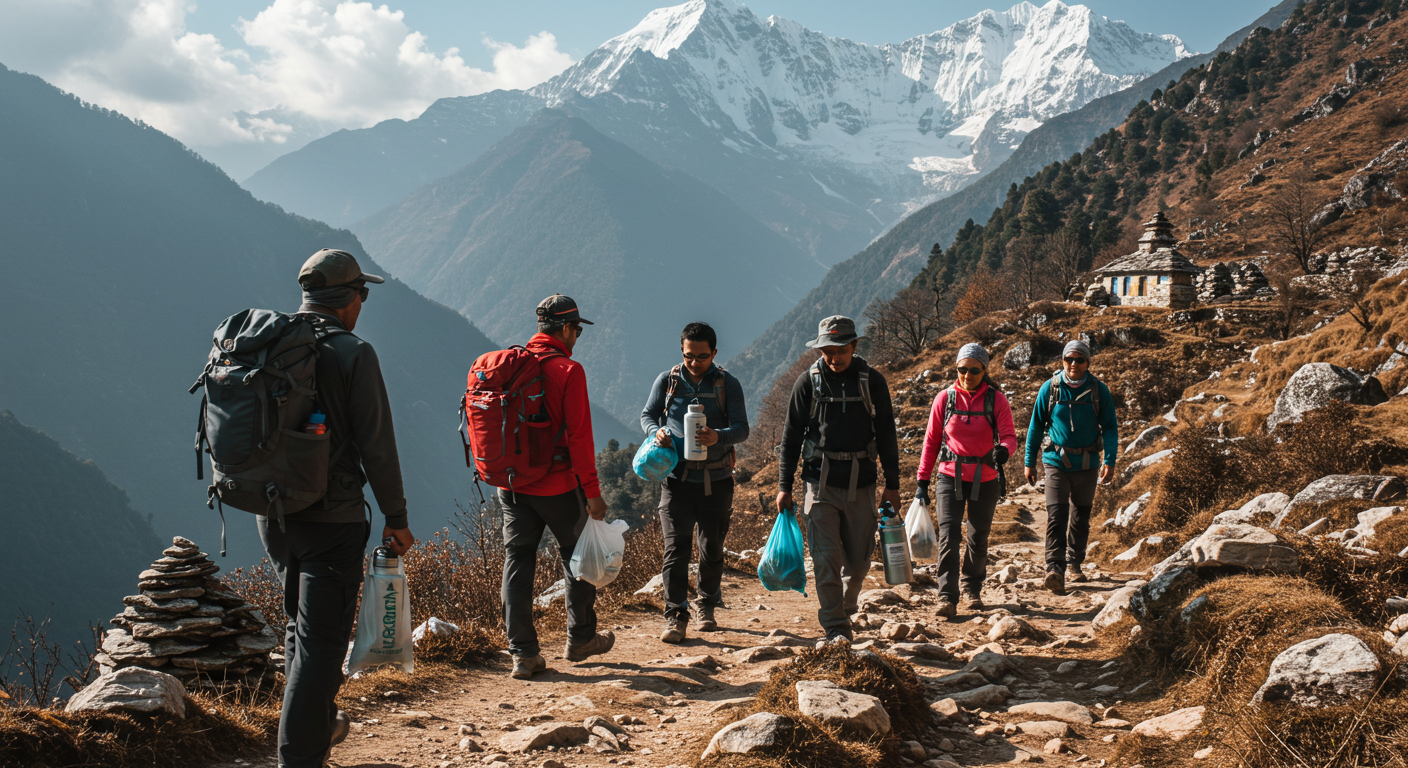
How can I minimize my environmental impact while trekking in Nepal?

Use refillable water bottles with purification systems, carry all non-biodegradable waste out, use biodegradable toiletries, and stay at lodges using renewable energy sources.

What percentage of my tourism spending typically reaches local communities?

In conventional tourism, as little as 10-20% may remain locally. By choosing community-based tourism initiatives, homestays, local guides, and locally-owned businesses, you can ensure 60-80% of your spending benefits local communities.
https://www.youtube.com/watch?v=NjFTH7oOStg
Home
Know More
Contact US

On This Page

  • Public-Private Partnerships
  • Local Community Involvement
  • Measuring Success in Sustainable Tourism In Nepal
  • Key Performance Indicators
  • Global Benchmarks
  • The Future of Sustainable Tourism in Nepal
  • Emerging Opportunities
  • Technology for Sustainability
  • Youth Involvement
  • Conclusion
  • How You Can Support Sustainable Tourism in Nepal
  • What is the best time to visit Nepal for sustainable tourism?
  • How can I verify if a tour operator in Nepal is truly sustainable?
  • Are there sustainable alternatives to popular trekking routes?

Share This Story

𝕏 / TwitterFacebook

Plan Your Trip

Guided treks, wildlife safaris & cultural tours with local experts.

View Tours →Ask a Question

Continue Reading

You Might Also Like

View all posts →
Untitled design 1 1
Blogging
Mar 22, 2025 5 min read

7 Powerful Truths About Lord Vishnu’s Cosmic Breath

Read more →
Untitled design
Blogging
Mar 22, 2025 6 min read

Behada Baba Temple: 7 Miracles, Legendary Tales, and Spiritual Mysteries

Read more →